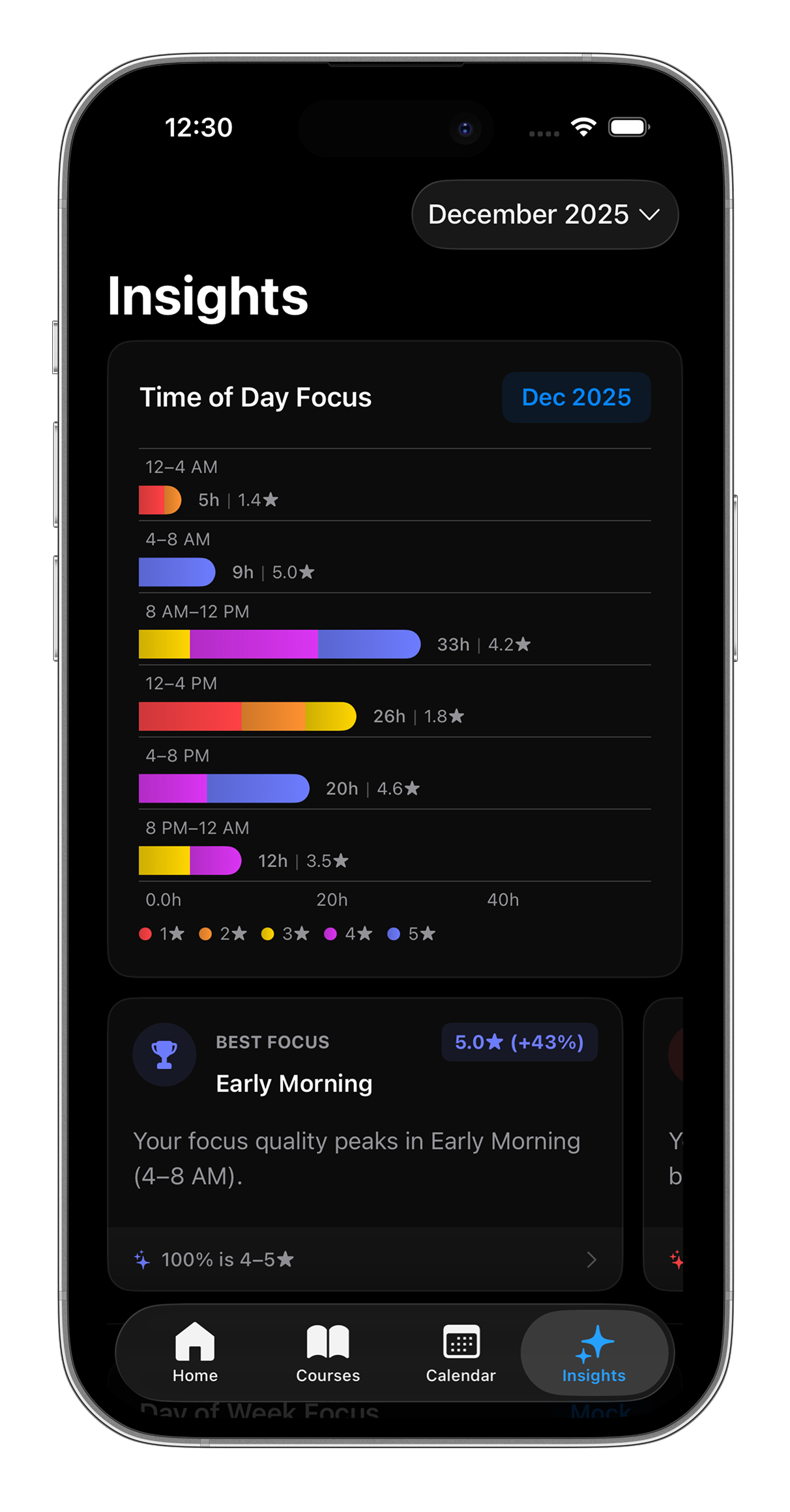
Peak hoursFind when focus is actually strongest.
Student Playbooks
These stories are practical examples of how students can use Estudylog: log the session, connect it to a topic, notice the pattern, then choose the next study block with less guesswork.
Common Theme
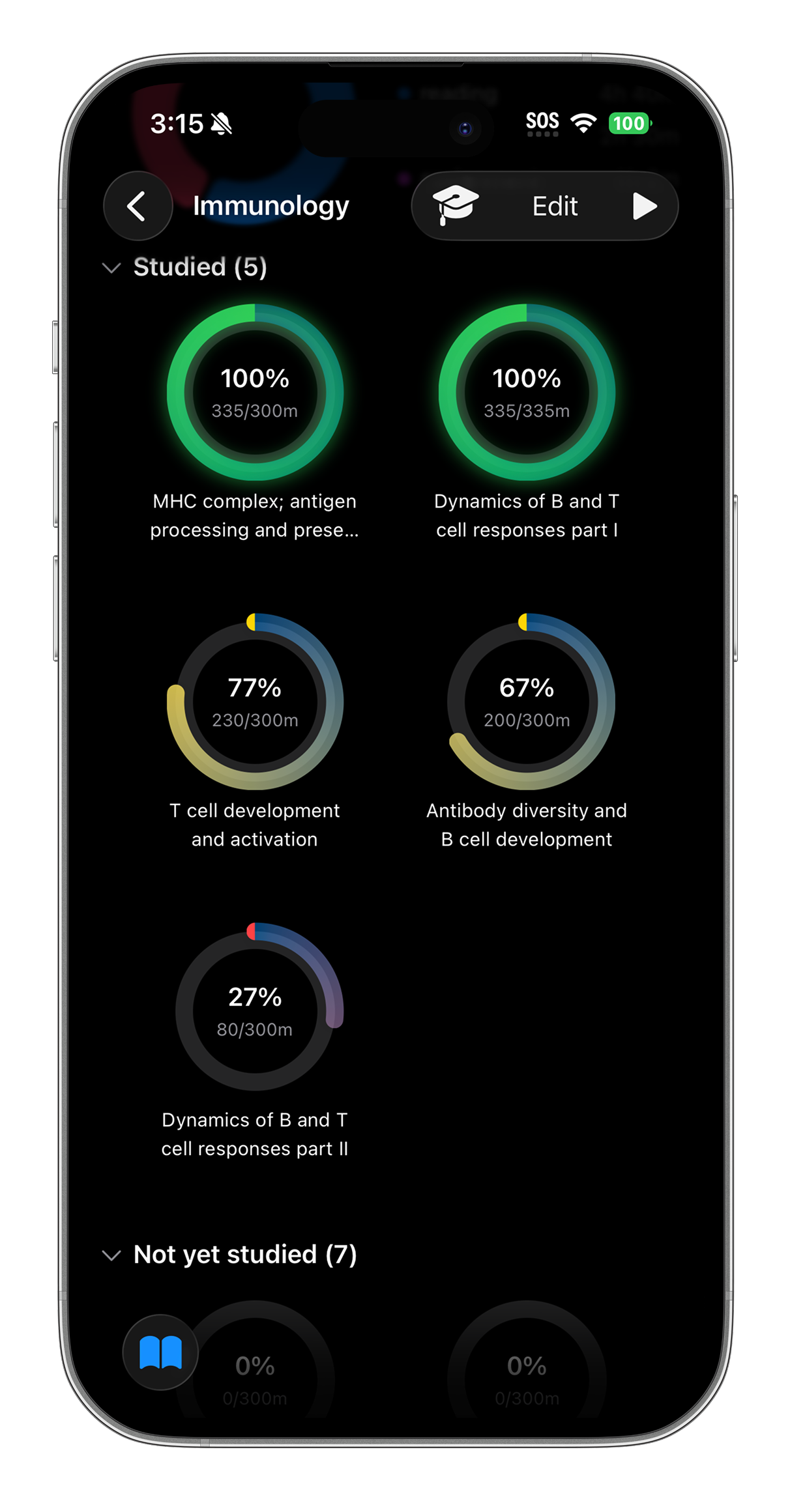
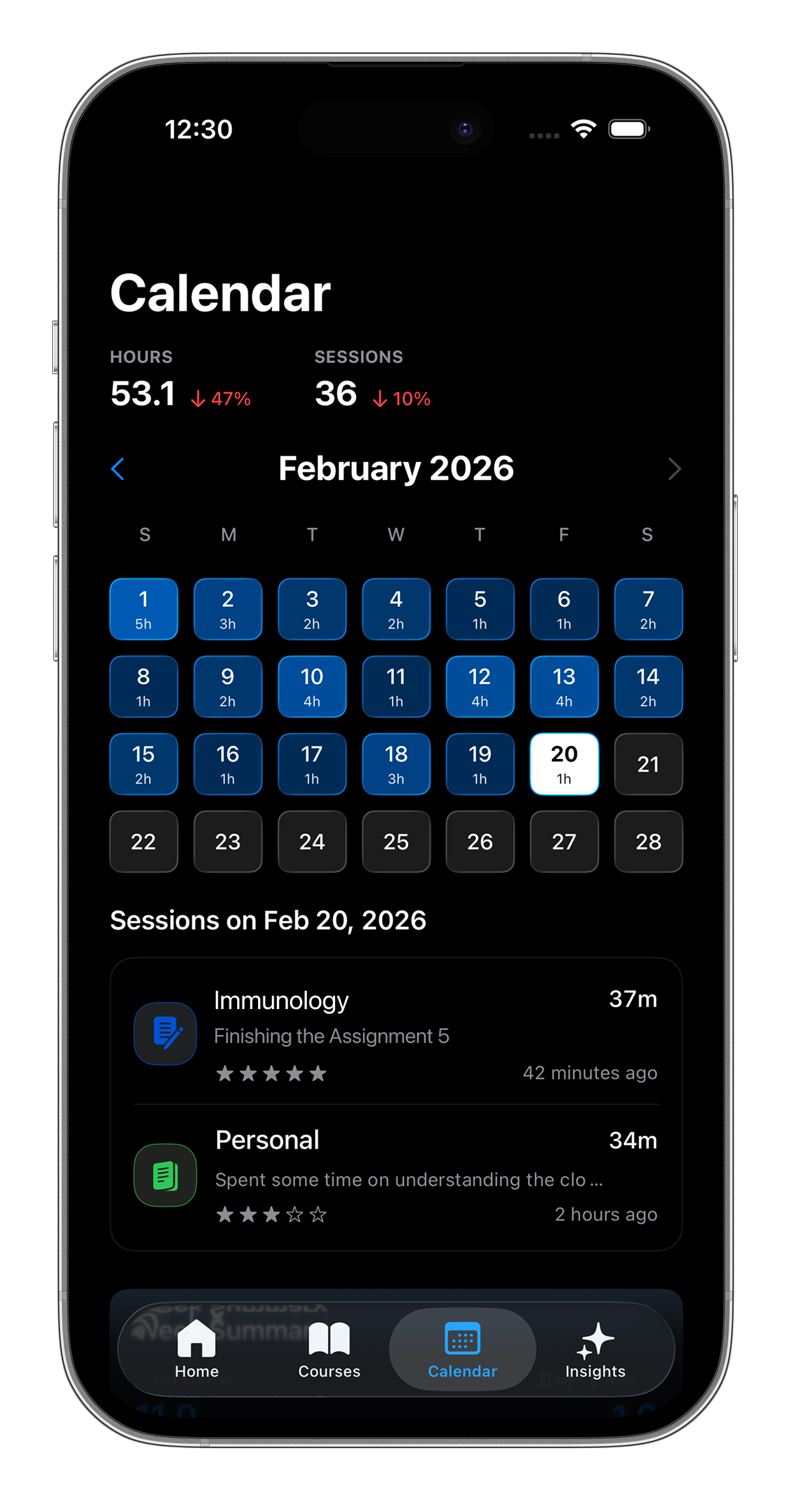
A timer alone tells you how long you sat there. Estudylog makes the session useful by tying it to a course, topic, method, focus rating, notes, and calendar history.
Start Here
Toronto
Too many lecture units looked familiar, but the exam outline still had blank spots.
Turned the syllabus into topics, then used short review sessions to close the untouched sections before lab week.
Less comfort-review, more targeted review.Austin
Two essays and a midterm landed in the same week.
Used focus ratings to protect the strongest hours for writing and moved easier reading into lower-energy slots.
A cleaner week plan without every task pretending to be equally hard.Manila
Clinical weeks made long study sessions unrealistic.
Logged honest 20-minute sessions and used notes to capture what needed one more pass after shifts.
Consistency stayed visible even on heavy weeks.Library
London
Algorithms kept stealing time from systems and math.
Chicago
Four syllabi, sports practice, and no clear sense of what was actually covered.
Denver
Study time had to fit around work, family, and early mornings.
Vancouver
The first semester felt like a pile of disconnected due dates.
Madrid
Vocabulary review was consistent, but speaking practice kept getting skipped.
The Rhythm
Your Turn
Send a short note to [email protected] with your program, what changed, and which feature helped most.