Active recall beats rereading
Rereading feels productive because it’s smooth and familiar. Active recall feels harder on purpose — because it trains the exact skill your exams require: pulling answers from memory.
“When learning feels harder, it often sticks longer.” — Make It Stick
Why rereading feels like progress
Rereading is one of the most common study habits for a reason: it’s comfortable. The information looks familiar, your speed improves, and the page starts to feel “easy.”
The problem is that familiarity can trick you into thinking you’ve mastered the material. You recognize the content — but recognition isn’t the same as being able to recall it under pressure.
That’s why students can study for hours, walk into a quiz, and suddenly feel like their brain is empty. The time was real — but the learning didn’t convert into retrieval strength.
Active recall: the skill exams reward
Active recall means you practice pulling information out of your brain without looking first. It’s not about reading the answer again — it’s about proving you can produce it.
It’s simple, but it changes everything:
- Instead of: “I understand this when I see it.”
- You aim for: “I can explain this without notes.”
The slight struggle is a feature, not a bug. That friction is what strengthens memory and makes future recall faster.
4 easy ways to do active recall
You don’t need a perfect system. You just need a repeatable loop that forces retrieval.
- Close-and-recall. Read a small chunk, close it, and write what you remember in bullet points.
- Headings → questions. Turn titles into prompts and answer them out loud before checking.
- Flashcards that demand one answer. Keep cards specific. Delete cards you always ace.
- Problems first. Attempt a question cold, then study only what fixes the mistake.
Why your “mix” matters more than your hours
Two students can study the same amount of time and get completely different results. The difference is often thetype of work they did.
A week of only reading keeps you busy, but it often stays passive. A mixed week forces retrieval and application — and that’s where the grade movement happens.
A mix: reading + recall + application — harder, but much more effective.

All reading: smooth, familiar, and easy to repeat — but weak under testing pressure.
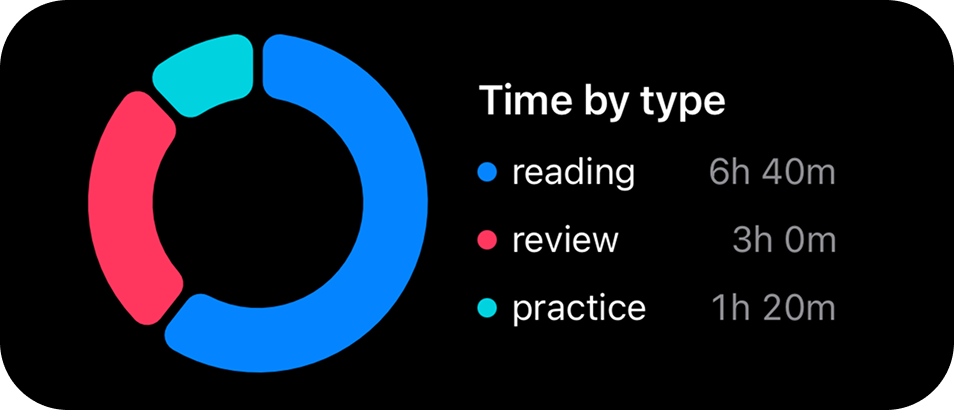
If you use EstudyLog, the Time by type chart can act like a quick reality check. If the chart is mostly “Reading,” you’re probably spending more time consuming than recalling.
The goal isn’t perfection — it’s awareness. Aim to keep your week mixed by adding more Review andPractice sessions so your study routine stays retrieval-heavy.
A realistic target that works
You don’t need to eliminate reading. You just don’t want it to dominate your entire routine.
A strong weekly balance can look like:
- 30–40% Reading (learning the idea)
- 30–40% Practice (applying it)
- 20–30% Review (recalling it later)
If your routine is 90% rereading, your next step is simple: replace one reading session with practice, then replace another with review. Small shifts add up fast.
One quick way to keep yourself honest
Here’s a rule that makes active recall automatic:
If you can’t answer it without looking, you haven’t learned it yet.
That doesn’t mean you’re behind. It means you found the exact spot where learning should happen.
Active recall FAQ
What is active recall?
Active recall is a study method where you try to retrieve information from memory before checking your notes. Instead of rereading the answer, you practice producing it yourself.
Is active recall better than rereading?
Active recall is usually more effective than rereading because it trains retrieval. Rereading can make material feel familiar, but testing yourself shows whether you can actually remember it.
How do I use active recall while studying?
Read a small section, close your notes, and write or say what you remember. You can also turn headings into questions, use flashcards, or attempt practice problems before reviewing the solution.
Can active recall help with exams?
Yes. Exams require you to pull answers from memory, so active recall practices the same skill you need during tests. It is especially useful when paired with practice questions and spaced review.
Bottom line
If your studying isn’t converting into results, it’s not always a “work harder” problem.
Rereading makes you feel prepared. Active recall makes you actually prepared.
Start small: one recall-heavy session today. Your future self will notice the difference.